Showing posts with label leadership. Show all posts

Sunday, March 20, 2022

Starting Your Own Initiative as a High School Student

Loading...

Loading...

Thursday, January 23, 2020

Jacinda Ardern: Prime Minister of New Zealand (2017 - Present)

By: Gracie B.

This post is the first in a series of four articles highlighting the unique contributions of influential female world leaders. This month's article features Jacinda Arden, the current Prime Minister of New Zealand.
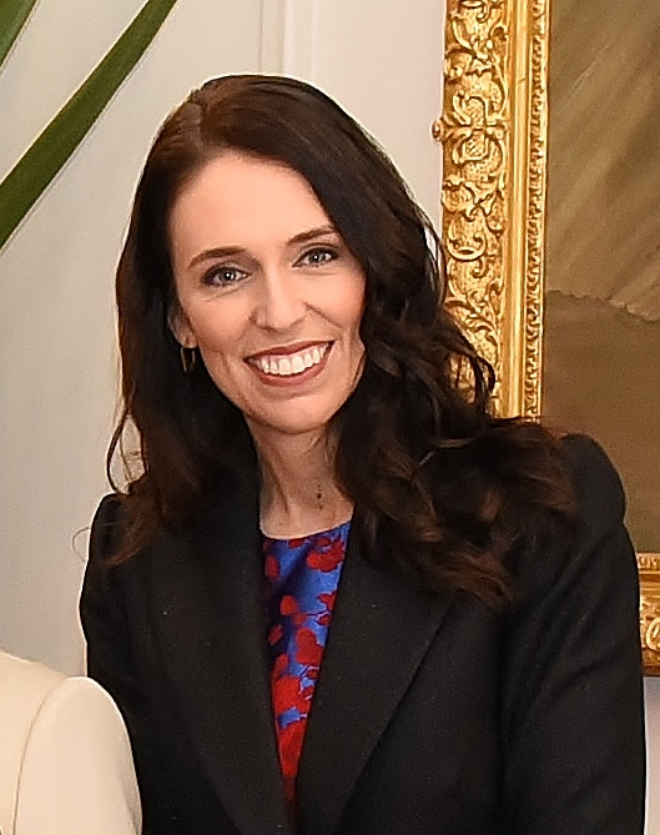


“Jacinda Ardern” Wikimedia Commons, Wikipedia,


"You can be strong, and you can be kind.”  – Jacinda Ardern

It was September of 2018, and the Prime Minister of New Zealand boarded a plane to New York for a United Nations General Assembly. While other politicians invited translators and advisors to the summit, Ardern brought an unexpected guest: her infant daughter, Neve.1 After becoming the second woman in modern history to give birth while leading a nation, Ardern sought to express her support for working mothers.2, 3 In this bold show of solidarity, she demonstrated the progressive, empathetic nature of her prime ministership. “You can be strong, and you can be kind,” she said when asked to explain her ideal of compassionate government. In an interview on The Today Show, the Prime Minister outlined her goal of promoting the overall wellbeing of New Zealanders.4 Although accomplishing this agenda is no easy task, Ardern has refused to shy away from the complex challenges facing New Zealand. Her willingness to tackle contentious issues head-on has garnered global interest in her innovative leadership style.

Jacinda Ardern was born in Murupara, a part of New Zealand riddled with poverty and Maori gang violence. She witnessed destitution first-hand, and her early experiences sparked her passion for inciting political change.5 After relocating to Auckland, Ardern joined the Labour Party at just seventeen years old.6 The Labour Party shapes New Zealand politics through a tripartisan coalition government, which brings together a multitude of different perspectives to create policy.7 Although the Labour Party is often described as center-left, Ardern has skirted its most liberal fringes. For instance, her service as president of the International Union of Socialist Youth earned her the nickname “Socialist Cindy.”8, 9 Yet, despite conservatives’ concerns over her overt leftism, Ardern gained a wide following after becoming leader of the Labour Party in 2017.10 The country was soon caught up in a craze known as Jacindamania, which fueled her campaign for the prime ministership in the same year. Thirty-seven-year-old Ardern was appointed to the position by the Governor-General, becoming the youngest Prime Minister in New Zealand’s history.11, 12

As the newly appointed head-of-state, Ardern proposed a sweeping policy agenda. She marketed a ‘fairer deal’ for New Zealand citizens, which included free college, decriminalization of abortion, and initiatives to mitigate childhood poverty. In contrast to pro-immigrant American liberals, she has pushed to reduce the number of migrants entering New Zealand.13 Although Ardern is a self-described champion of humanitarianism, she posits that curbing immigration would mitigate the country's housing shortage.14 Additionally, Ardern has been hailed for her contributions to the feminist movement. She was a proud participant in the 2016 Women’s March and argued against the expectation that women reveal family plans to potential employers in a fiery interview exchange.15, 16 Many analysts have been charmed by her unconventional conduct, which is summarized by journalist Maureen Dowd in her New York Times’ Op-Ed entitled “Lady of the Rings: Jacinda Rules.” Dowd, who sat down for an interview with Ardern, was immediately stricken by the Prime Minister’s casual demeanor. From preventing a proposed raise to her own salary to shopping at K-Mart, Ardern’s frugal sensibility has allowed her to prioritize the interests of ordinary citizens.17 Yet, her “relentless positivity” was threatened by the 2018 Christchurch mosque shooting, in which an Islamophobic gunman killed dozens of worshippers. Jacinda Ardern was quick to comfort the families of victims, condemn bigotry, and push for gun control. Ardern’s clarion call for tolerance received worldwide praise, demonstrating her ability to lead in both triumph and tragedy.18

Although not without controversy, Jacinda Ardern’s prime ministership is transforming New Zealand. Ardern champions an approach to policy that is designed to be both practical and compassionate. In prioritizing education, healthcare, and housing, Ardern hopes to create a more equitable society in which all people can share in the country’s prosperity. As she continues to challenge conventions and push for change, Jacinda Ardern’s progressive policies will undoubtedly continue to play an influential role in global politics. 



1 France-Presse, Agence. “New Zealand's Jacinda Ardern Says Baby Neve Will Attend United Nations with Her, as She Returns to Work.” The Telegraph, Telegraph Media Group, 2 Aug. 2018, www.telegraph.co.uk/news/2018/08/02/new-zealands-jacinda-ardern-says-baby-neve-will-attend-united/.
2 Dowd, Maureen. “Lady of the Rings: Jacinda Rules.” The New York Times, 8 Sept. 2018, https://www.nytimes.com/2018/09/08/opinion/sunday/jacinda-ardern-new-zealand-prime-minister.html.
3 McLaughlin, Kelly. “New Zealand Prime Minister Jacinda Ardern Has Been Applauded for Her Actions Following the Christchurch Mosque Shootings. Here's Everything You Need to Know about Her.” Business Insider, 20 Mar. 2019, https://www.businessinsider.com/new-zealand-prime-minister-jacinda-ardern-biography-2019-3#ardern-joined-new-zealand-parliament-in-2008-2.
4 “New Zealand’s Prime Minister Talks About Being a New Mom and a World Leader.” Today, NBC Universal, New York, New York, 24 Sept. 2018.
5 Wallenfeldt, Jeff. “Jacinda Ardern.” Encyclopædia Britannica, https://www.britannica.com/biography/Jacinda-Ardern.
6 Wallenfeldt, “Jacinda Ardern.”
7 “New Zealand : Constitution and Politics.” The Commonwealth, Commonwealth Secretariat , https://thecommonwealth.org/our-member-countries/new-zealand/constitution-politics.
8 Wallenfeldt, “Jacinda Ardern.”
9 Dowd, “Lady of the Rings: Jacinda Rules.”
10 Wallenfeldt, “Jacinda Ardern.”
11 “New Zealand : Constitution and Politics.” The Commonwealth.
12 Dowd, “Lady of the Rings: Jacinda Rules.”
13 Wallenfeldt, “Jacinda Ardern.”
14 da Costa, Ana Nicolaci. “New Zealand PM Says No Immediate Cut to Immigration.” Reuters, 6 Nov. 2017, www.reuters.com/article/uk-newzealand-politics-ardern/new-zealand-pm-says-no-immediate-cut-to-immigration-idUKKBN1D708L.
15 Dowd, “Lady of the Rings: Jacinda Rules.”
16 Wallenfeldt, “Jacinda Ardern.”
17 Dowd, “Lady of the Rings: Jacinda Rules.”
18 McLaughlin, Kelly. “New Zealand Prime Minister Jacinda Ardern Has Been Applauded for Her Actions Following the Christchurch Mosque Shootings. Here's Everything You Need to Know about Her.”

Wednesday, April 25, 2018

A Note From the Editor: What's With All the Walkouts?

By: Isabella S.

The power of today’s youth is a “hot topic” in our society right now. With national walkouts, marches, and boycotts, students everywhere are making their voices heard. So, what’s the big deal? Does it really matter if we, as teens, get involved? I mean, some of us can’t even vote. Are they really going to listen to a bunch of kids? The simple answer: yes. Yes, your voice matters. Yes, they will listen. Yes, you are important.

Your Voice:

When we speak, we free our opinions and show others that they are not alone. Chances are there is someone out there who agrees with you but is scared to speak up. Speak for them. Speak for yourself. 
When you tell others how you feel, you are telling yourself that your feelings matter. 
Even if they don’t listen, they will hear you. Simply having a conversation with someone can brighten their day, tell them they’re not alone, introduce them to a new perspective, and encourage them to take action.

Your Actions:

Being politically active may seem like a daunting task. A term reserved for the Greensboro Four, Thomas Paine, and Alice Paul, this phrase may inspire images of huge rallies, presidential campaigns, and international marches. Though many individuals hold this perception, being a political activist is not as difficult as it seems. For example, 
someone who claims to be physically active is not expected to run daily marathons.
They may simply play a sport they enjoy or workout routinely. In the same way, to be politically active all you have to do is find something that speaks to you some topic that inspires you and motivates you to act. These actions can be as simple as watching the news and listening to your peers. Staying informed is the first step to cultivating a reaction. Other examples of political activities include joining the student government, calling your representatives, attending town hall and community meetings, volunteering with a political campaign, or even organizing a walkout. The most important element to keep in mind is your values. Make sure that whatever you choose to do is productive to the cause you are supporting and that you are proud of yourself at the end of the day. 
Step outside of your comfort zone and pull a few friends along with you. 
It’s all about the experience and your ability to make a difference.

Your Purpose:

As a teen, your actions are not only a measure of your own determination but they are also crucial to society. No other generation has the same experience as the current teenage population. No adults can claim to share our perspective. Our voices are unique and our viewpoints varied. So, do not be afraid to disagree with adults. Experience does not yield perfection. They’re people too! Plus, their experiences are also limited in their own way. We’re all learning and growing. 
With topics such as politics, the world is constantly evolving and we should be too.
Your Revolution:

Through "walking the talk" and acting out your own beliefs, having healthy conversations about different opinions, and being involved in your community, along with its various organizations, you as one, young person can start a movement. Every action has an equal reaction. The impact of every small act will be multiplied every time it touches a new individual. 
Be passionate. Be compassionate. Be heard.

Wednesday, January 18, 2017

Hoggard Peer Partnership

By Elizabeth M.
Elizabeth M. is a student volunteer for North Carolina Virtual Public School. She is the founder of Hoggard Peer Partnership, a peer assistance program at her high school. This article describes the journey of starting her program and offers advice on what it takes to start an organization. 


Inspiration:
I began volunteering with the North Carolina Virtual Public School’s Peer Tutoring Center in the summer of 2015, and through my volunteer work I discovered the Peer Tutoring Center’s Virtual Buddy Program. As a Virtual Buddy, I serve as a guide for NCVPS students who need additional support in their courses, assisting with time management, study skills, and course navigation. I’m passionately involved with all my Virtual Buddies, relishing in their progress as much as I would in my own, and I’m currently the student lead of the program. Developing personal relationships with my peers from across the state felt incredibly special to me, and I knew there were students at my face-to-face school who could benefit from a service similar to the Virtual Buddy Program.


Motivation:
I saw a need at my school for additional resources that students could take advantage of as they advanced in their academic goals. My school is good at promoting upcoming college visits, test dates, scholarships, guest speakers, and other educational opportunities, but sometimes it just doesn’t feel like students are getting all the information they need. I also noticed that many students were stressed under the pressure to do well in class, and I wanted to takes steps to address these issues.


My Vision:
I wanted to provide a service where students could be paired with a peer mentor or partner who could provide advice and support in areas in and out of school. From this goal I conceived Hoggard Peer Partnership. The program aims to help students seeking to improve their study skills, build their confidence, and create social and academic connections. Students have the opportunity to learn more about course offerings and educational opportunities at my school through working with knowledgeable peer volunteers.


Building the Foundation:
  • Every club at my school has to have a faculty sponsor, so I asked my school guidance counselor if she would be interested in sponsoring the program. She accepted, and we met over the summer to discuss program goals and logistics (recruitment of volunteers, advertising to the student body, student application process, training for volunteers, nature of peer partnerships, etc.).
  • My school hosts a club fair at the beginning of the school year to give the student body a chance to see the organizations the school has to offer. Club participation in the club fair is optional, but it is a huge event every year at my school, drawing massive crowds. I created a tri-fold to advertise the goals of my program, and I made a flyer to hand out to passersbys and interested students. I had a signup sheet where students could write down their contact information. I wasn’t sure how many people would sign up, but I was aiming to have about 10 volunteers in the program to start. I had 30 people write down their names by the end of the hour long event (which I was thrilled about!).


Starting up the Program:
  • Training weeks: Before Hoggard Peer Partnership could start helping students, volunteers had to go through training. For the first six club meetings, I organized a short lesson and a related discussion covering communication skills and areas I expected students to need assistance with, including note taking and time management.
  • Name Change Game: Initially, I named my program Hoggard Helpers Peer Mentoring Group, but discussion with the club’s volunteers led me to changing the name to Hoggard Peer Partnership.
  • Google Forms! I created a Google Form where students could request a peer partner. Students select what areas they are looking for help in, and volunteers filled out a similar form so I could make appropriate volunteer to student matches later.
  • Advertising: In order to draw interested students to the program, I organized an open house during my club’s usual meeting time for students to come and socialize with peer partners. I wrote an announcement for the open house to be read on my school’s intercom system, and a Hoggard Peer Partnership volunteer made an advertisement to hang in the halls. I also worked with my faculty advisor to spread the word about the open house through the school staff.


Mission in motion:
  • Currently, we have seven students working with Hoggard Peer Partnership volunteers, and we have about ten volunteers in the program.
  • We are working on setting up a club website where students can find out more about the program, request a peer partner, and sign up as a volunteer all in one place. We are also setting up social media accounts to advertise the program and give students another way to learn more about what Hoggard Peer Partnership does.


Advice: 
If you are interested in starting an organization at your school, here is some advice for you to consider:

  • Be sure to listen to the members of your group. You’re still the leader, but being open to new ideas will improve your program.
  • Google Drive is a great tool for making everything from typed documents to graphics. All you need is a free gmail account to access Google Drive. Also, Google Drive has a great collaboration system so you can work on documents with others in real time.
  • Make a mission statement. Creating a mission statement will help you stay focused on the goals of your organization and provide your school’s student body with a clear idea of what your group plans to accomplish. Re-reading Hoggard Peer Partnership’s mission statement (“Our mission is to provide guidance and support to students seeking self-improvement”) gives me motivation to keep going when I face challenges related to the program.
  • Keep an attendance log. Over time, you will see the students who are really devoted to your organization, and knowing this information will allow you to delegate tasks appropriately and trust they will be completed.
  • Don’t be afraid to delegate and ask for help with tasks. Make the best of your group members’ expertise, whether it is their talent for art or their familiarity with building websites.
  • Advertising has been the most challenging part of starting Hoggard Peer Partnership. It’s difficult to capture the attention of your school, so don’t get discouraged if your first round of promotional materials doesn’t make waves.
  • Network with your school’s teachers and other faculty members. They can often help you promote your group in their classes or provide you with a meeting space. Also, talking to your school’s staff is an excellent way to improve your own speaking and communication skills.

Saturday, September 3, 2016

Becoming a Leader

By Preethi K.

Leader. It's a big word with a big meaning. In today’s world, leaders are who we need in every field for advancement and solutions to rising problems. I’ve realized that leaders aren’t born- they are made. Leaders need to face a lot of difficulties before they reach their vision. I went through these difficulties and realized what truly makes a leader great.
High school is a time for you to find yourself and how you fit in society. So the summer before I started high school, I contacted the National HOSA to see if I would be able to start a chapter at my school. The National HOSA was difficult to get into contact with because the state advisor was busy with other events during that time, but I kept at it because I really believed I could accomplish my goal.
I contacted many teachers at my future high school to see if they were interested in being the club advisor. My high school had a lot of clubs, and several teachers were already advising other clubs, but I found one teacher who kindly agreed to be my advisor. She was a really busy teacher, advisor to many clubs, and went to college. We agreed that I would take responsibility for most of the dealings of the club.
I set up the first meeting and almost 100 people attended to learn more about the club and the wonderful opportunities the HOSA organization provides. I registered the interested members and collected the fees that needed to be paid to the National HOSA. I knew that I alone would not be able to handle the duties associated with the club, so I created an application for interested students to become board members. Almost every member applied, and I realized I wasn’t the only one trying to make a difference; a lot of people like me wanted to be a leader. I chose 14 people who seemed like they would contribute the most to the club. The people who weren’t chosen expressed the feeling that they wouldn’t have as much to help with if they weren’t given a position, and I came to believe that some people wouldn’t put in an effort if they weren’t given a position or a name. But the thing is, if you work hard, whatever the position you hold, you will move up to the place you want to be. This was my exact reply to the people who felt a little disappointed, and I guess some of them understood because they brought in opportunities for us.

I had another problem as we continued in the year; the fact that I was a freshman led to my board members not taking me seriously. They wouldn’t do their tasks and wouldn’t even give an effort to participate in the board meetings. I thought if I could do some of their responsibilities for them then they might see that it’s a team effort and they would take part too. I eventually realized that they weren’t getting past the fact I was in charge and they weren’t happy about listening to me.
My dad talked to me and told me this was natural. People wouldn’t like the fact that a smaller person seemed to be the boss. I believed that we were all working together to make our school more beneficial. I came to realize that a leader should care about the people they are working for and that they can’t please everyone; they won’t get anywhere if they try.
I began to print out tasks for each board member to complete, and I stood my ground. The club is a team effort, and I ensured it would be. Over the course of the year, we brought in professors and other members involved in the medical field, and we provided volunteer opportunities and connections that the students could use for job shadowing and internships.

I am proud that for the first year, we created a foundation on which the club could grow. More importantly, I realized a leader should believe in their cause and should do what they think is best to reach their goal. Anyone can become a leader, regardless of if they hold a position, by getting involved and showing a genuine interest.