Showing posts with label encouragement. Show all posts

Monday, August 31, 2020

Why Take a Gap Year?

By: Jasmin S. 

Although gap years between high school and college are not as common in the U.S., they are very popular among students in places like Europe. This may seem surprising to us, but it makes perfect sense why one would choose to take a year off between 12th grade and freshman year of college. After spending four years balancing various extracurriculars, classes, studying, family, part-time jobs, and more, you might feel like jumping right into college is a bit overwhelming. Maybe you need a break from the constant pressure of your classes and tests, or you’re still not sure which major to choose. If this is the case, a gap year might be the perfect solution for you! 


Better Performance in College 

"Gap Year: preparati a viviere l'anno piú bello
della tua vita!"
by Viaggio Routard is licensed
under CC BY 2.0

Many parents fear that if their child stops taking classes and going to school, they will become lazy. This is not the case at all. In fact, students who take gap years tend to be more mature than their peers by the time they enter college. According to 2015 research conducted by Temple University in conjunction with Gap Year Association, the six top reported outcomes of a gap year were personal, rather than career or academic-oriented. Ninety-seven percent of alumni who responded indicated that their gap year experience increased their maturity, while 96 percent said it increased their self-confidence (Writers). 


First-year classes in college can actually be easier thanks to your gap year, especially if you take that time to personally acquaint yourself with the courses you plan on taking. You’ll be able to pick up new languages much quicker if you've already spoken with native speakers. Humanities and other courses can also be easier after all those museum and historical landmark visits! 


Living Independently 

Image by Steve Buissinne from Pixabay
Whether you choose to travel on your own or with a program, you will learn essential skills like grocery shopping for yourself, budgeting, healthy eating, navigating public transit, etc. All of these skills are crucial for college and adult life in general! If you choose not to work with a program, you can always do a work holiday option. Thereby having the opportunity to not only make money but immerse yourself deeply into another culture for a longer period of time than would be possible if you were merely backpacking. 


Establishing Worldwide Connections 

Image by Voy Zan from Pixabay

One of the best things about taking a gap year is the opportunity to meet new people. Building lifelong friendships with people from various countries can help you navigate unknown places and refine your language-speaking skills, and those friends will likely welcome you with open arms if you return! Learning how to make friends in an unfamiliar place with unfamiliar people is a skill that will come in handy in college as well. 


Endless Possibilities 

There are a plethora of activities to choose from when it comes to structuring your gap year. There are many ways to stay productive and busy, so there is no need to worry about doing nothing or playing video games in your mom’s basement all day. There is a wide range of possibilities (even on a budget) from backpacking in Asia to landing an internship in a different state. 


No Money, No Problem 

Image by Alex Strachan from Pixabay

A common myth surrounding gap years is that you have to have a lot of money to be able to take a whole year off from school. However, this is not necessarily the case. Some students use gap years as an opportunity to save up money for college and future living expenses. Others may choose to spend their time volunteering abroad with a program that helps cover living costs. That’s right, some programs pay you to take a gap year! Volunteering can help you gain a new perspective on the world. In fact, they can help students give back to their communities throughout their lives. Many gap year students become philanthropists when they are older due to their global perspective. 


Countless Traveling Options 

Image by skeeze from Pixabay
International travel might be your dream, but there are also many exciting places in the Americas you can visit! You could go to Canada and practice your French, an American national park to enjoy nature, Brazil to learn Portuguese, Mexico to eat delicious food, and so much more! Traveling to any new place is an enriching experience that will teach you new things. 


As long as you get out of your comfort zone, try new things, make new friends, and live independently for what’s likely the first time, a gap year will be well worth your time! According to GoOverseas.com, more than 90% of gap year alumni say that their gap year experiences helped them gain respect for other customs and cultures (Perez). 


Keeping It Local 

Image by Bella H. from Pixabay

If you choose to stay at home during your gap year, there are still plenty of options for you! After all, travel can be daunting and not everyone wants to do it. With more and more programs appearing online, you can do all types of jobs remotely! From teaching music to marketing on social media, you will likely be able to find a job that you enjoy, can do online, and can help you save money for college! You can also get involved in your community by volunteering for local organizations. Furthermore, you will have the opportunity to learn new skills. Have you been wanting to learn how to play an instrument? How to code? Now is your chance! 


Conclusion 

Overall, taking a gap year, though not common, has numerous benefits. It can help you grow a new set of skills you didn’t know you needed for college, help build a global network of new friends, assist you in choosing the right career, and provide you with experiences that will last a lifetime. If you would like to further research gap years, there are links and resources below to aid you in your search for ideas below. 


Resources for Gap Year Programs 


Works Cited 

“Does Taking a Gap Year Increase the Ceiling for Students?” NYU Steinhardt, 23 June 

2017, counseling.steinhardt.nyu.edu/blog/gap-year-after-high-school/.

Perez, Olivia Christine. “Why You Should Take a Gap Year After High School.” Go 

Overseas, 04 June 2020, 

www.gooverseas.com/blog/why-should-take-gap-year-after-high-school.

Writers, Staff. “Taking a Gap Year: Pros & Cons and How to Apply to College.” 

AccreditedSchoolsOnline.org, AccreditedSchoolsOnline.org, 17 July 2020, 

www.accreditedschoolsonline.org/resources/taking-a-gap-year-before-college/.
Thursday, April 23, 2020

Psychology, Stress, and Uncertain Futures: Confronting the Coronavirus Pandemic

By: Gracie B.

Pixabay license
No attribution required
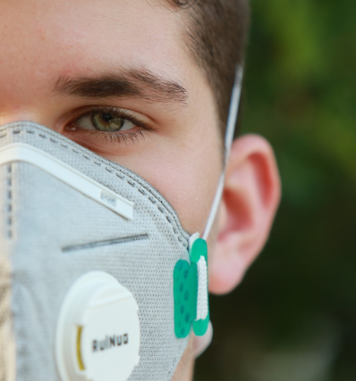
With all of the uncertainty surrounding the COVID-19 pandemic, we are living in an extraordinarily stressful time. Social distancing to prevent the spread of the virus presents many challenges to students and families across the world. The CDC cites that teens are especially vulnerable to crisis-related anxiety. After spending our entire school careers preparing for life after graduation, it is undoubtedly frightening to have our futures suddenly shrouded in ambiguity. Now, perhaps more than ever, it is important to take care of both our physical and mental health. Maintaining positivity and stability is crucial to fostering the courage and resilience that will carry us through this difficult season. 

The internet is full of endless ideas on how to relieve stress, but the reality is that there is no one-size-fits-all approach to wellbeing. While many people use deep breathing or meditation to destress, there are countless other, less conventional ways to blow off steam. CDC experts assert that simply partaking in enjoyable activities fosters positive mental health. Whether you enjoy jamming out on your guitar or snuggling up with a good book, find fun and engaging ways to fill your spare time. 

In the hustle and bustle of everyday life, it can be surprisingly difficult to make time for hobbies we enjoy. High schoolers tend to be consumed by extrinsic motivations, meaning that we participate in activities primarily to win awards and to bolster our college applications. The coronavirus has removed many of the extrinsic motivators in our lives. We no longer receive any outward gratification for outsourcing our classmates on a calculus test or crushing the opposing team in a soccer game. Seniors are facing the possibility that no one will deliver the coveted valedictory speech or flaunt a scholar’s medal at graduation. Self-isolation has forced us to rely on intrinsic motivation: we must prioritize goals that are truly important to us as individuals rather than focusing on what society deems valuable.

As the world around us changes rapidly, we are flooded with reminders to remain positive. Time and time again, research has shown that optimism has a wide range of health benefits. However, many teenagers gravitate towards pessimism, and disappointment can exacerbate a vicious cycle of negativity. If you have a penchant towards negativity, consider finding productive ways to tap into your own cynicism. Questioning is a key component of critical thinking, especially in an age of rampant misinformation. Doubt reminds us that we shouldn’t believe everything we hear and encourages us to exercise caution to protect ourselves and others.

However, a healthy dose of realism also illustrates that our lives are not over and that there is hope for a much brighter future. Hope may be the most important building block of resilience. Psychologists associate the loss of hope with a phenomenon known as learned helplessness, which describes the tendency to give up when one feels powerless. The development of a sense of control is the key to breaking the cycle of learned helplessness and fueling a more positive outlook. Methods of establishing a sense of control include taking small steps towards overarching goals and practicing self-acceptance. NFL star Tony Dungy once said, “You can’t always control circumstances. However, you can always control your attitude, approach, and response.” We are not in control of the pandemic, but we have the power to shape our reactions. We have a unique opportunity to decide how our generation will resurge from the coronavirus pandemic. By striding forward with strength, tenacity, and compassion, we will emerge from this crisis with our heads held high.


Works Cited

“Learned Helplessness.” Psychology Today, Sussex Publishers, www.psychologytoday.com/us/basics/learned-helplessness.

“Mental Health and Coping During COVID-19.” Centers for Disease Control and Prevention, www.cdc.gov/coronavirus/2019-ncov/daily-life-coping/managing-stress-anxiety.html.

Myers, David G. Psychology (High School Printing). 9th ed., Freeman/Worth, 2011.

“Tony Dungy.” Biography.com, A&E Networks Television, 28 Aug. 2019, www.biography.com/athlete/tony-dungy.

“Tony Dungy Quote: ‘You Can't Always Control Circumstances. However, You Can Always Control Your Attitude, Approach, and Response.".” Quotefancy, quotefancy.com/quote/1169140/Tony-Dungy-You-can-t-always-control-circumstances-However-you-can-always-control-your.

“You've Got This: Mental Tricks to Feel in Control When Everything Is Going Wrong.” Reader's Digest, www.rd.com/advice/work-career/feel-in-control/.

Thursday, February 20, 2020

What to Do When You Feel like School is Taking Over Your Life

By: Sonia G.


Copyright free
Does the school week ever seem like a boring routine to you? Do your days look the same? Do you have time for family and friends, or do you feel like school is taking over every aspect of your life? School should be a priority, but it should not be the only one. Your family, friends, and possibly religion are also a priority, and if you play a sport or do activities outside of school, you have even more priorities to balance. But sometimes, school and all the stress that comes along with it can feel like it’s taking over everything. 

You might feel like your projects and studying barely leave you with time to interact with family and friends. Or that all of the cumulative stress leaves you unable to function. Either way, I have developed a plan that can help you whenever you begin to feel like school is becoming your life. 

First, I would recommend that you take breaks. If you can find a way to work and then take a break, you can give yourself a boost of energy. Your break can be as quick as checking your email or as lengthy as watching a movie. Just make sure that whatever you choose, your break is not longer than your work time and still allows time for you to finish the rest of your work. 

Another idea is for you to work during times that you do not typically think of as being opportunities to do schoolwork. Depending on your school, you may have a study hall or designated time when you can work. If you’re not as lucky, I would like to point out times that you may have overlooked. For example, on the ride to and from school, you have time to read and study. At lunch, you can create a study group with other friends and study, do worksheets, or work on projects. By applying this principle to your own life, you may also find other “free periods” that you can take advantage of. This will help you free up space so that you don’t have as much to do. 

Finally, I would like to suggest that you allow yourself to relax. Take time to do things that you enjoy so that you can approach your schoolwork with a clear mind. When you are able to focus on your assignments, you are much more likely to put forth the best effort possible and do much better than you could have done when distracted. 


Friday, September 20, 2019

A Letter to My Peers


By: Sonia G. 

To all my fellow high schoolers,
Picture by Angelina N.

As we find ourselves preparing for a new school year filled with new adventures, I would like to encourage you to continue to strive for excellence. Continue to push yourself to try new things. Join a new club at your school or better yet, start something that you’ve always wanted to participate in. As a rising junior, I find myself with only a short time left in high school. I have realized that you have to take advantage of every opportunity available. High school is the time to make connections, so take this school year as the time to put yourself out there and meet new people. You should also take this year to experiment in all aspects of your life. Figure out what works for you because the habits that you develop now will influence your physical and mental health in the future. 

While there will be a lot of exciting things to work on this year, I also have some advice for you all. Whatever isn’t working for you, whatever is keeping you from being who you want to be and whatever is holding you back from moving on, push it away. Find what works for you, and eliminate everything else. I always like to refer people to the 90 percent rule, which states that if an item or activity’s rating is less than 90 out of 100, your response should be “no”. I believe that this rule should be used to allow you to purge the negativity from your life. Use this rule to help yourself quit harmful habits and to replace those habits with practices that will help you improve your life. 

When the first day of school arrives, if it hasn’t already, remember to make the most of this year. If you are a rising freshman, know that high school and middle school are vastly different. If you did not enjoy middle school, that does not mean that you won’t enjoy high school. If you didn’t enjoy high school, then try looking at it through a different lens. I believe that with the support from your friends and family, you will be able to make your high school years unforgettable. This school year, eliminate the things that are holding you back, and take advantage of every opportunity that you can to find what gives YOU purpose, a purpose that may be your driving force for long past your high school years. 


Thursday, December 6, 2018

In Over Your Head

By: Isabella S. 

Did you know that the way a diver makes known that they need to ascend is a thumbs up? It may be used if something is wrong with breathing equipment or there is some other emergency. However, if you or I saw this gesture we would likely believe it to a be a positive symbol. Sometimes, one can appear to be doing just fine, when they are really signalling for help.


Picture by Isabella S.

You may be turning in all of your homework on time, only to go to class and struggle with the next test. You may have many friends, but replace your own needs with theirs. Maybe you are the star of a sports team, but you no longer find joy in playing. You may be the leader of a school club, but have trouble seeing progress. Maybe you are the paradigm of a good student, but don’t take time to build friendships. You may be involved in every community organization and every club that comes your way, but you can’t give your full effort to any cause.

In high school, there are many responsibilities one may assume and you are most likely surrounded by people giving you advice on how best to succeed (that is what this blog is for). As you swim through these various waters be careful of your own limits. It is okay to abandon surging tides, even if you have been swimming in them for a long time. It is okay to ask for help and it is okay to fail.

At the beginning of your high school career it is important to experiment with different dives. It is necessary for you to explore your interests or potential interests. You may jump in to various groups and realize that this pool is not for you. If you are no longer interested in playing basketball, or the debate club is no longer acting as a vehicle for your own personal progress, or maybe you are not sleeping for more than a couple hours each night, it may be time to ascend.

As you read through this blog and garner advice on how to be successful, remember that your definition of success is most important. Do not jeopardize your own mental and emotional health in order to fit society’s notion of success. You may be successful in becoming a positive role model for your younger siblings. Success may look like being the friend that everyone can lean on for support and good advice. Success may be exploring a nagging question through research and discussion. It may include becoming more independent or learning to depend on others. If you are looking back at 2018 and feel like you’re sinking, use the new year to make changes. Ask your friends and family to help you re-evaluate your life and see where you are in over your head. Reflect on your situation by making a list of what you are involved in and what you want to be involved in. Do not forget to give yourself credit for all of your success this past year.

An Important Note: Your struggle may be more serious than simply reducing your load or joining a new group. If you are sinking and cannot find a way up, it is important that you ask for help. No diver jumps in without someone on shore to help pull them out. Seek the help of your parents, a guidance counselor, a mentor, or another trusted adult. If you are experiencing more difficulty than you feel comfortable sharing or believe you need help from someone more qualified, there are resources available. You will find some of them at this link: https://giveusthefloor.org/resources/#hotlines. It is also important that you understand that you are not alone. Many students experience distress, but we misread their gesture as a thumbs up.  


Wednesday, April 25, 2018

A Note From the Editor: What's With All the Walkouts?

By: Isabella S.

The power of today’s youth is a “hot topic” in our society right now. With national walkouts, marches, and boycotts, students everywhere are making their voices heard. So, what’s the big deal? Does it really matter if we, as teens, get involved? I mean, some of us can’t even vote. Are they really going to listen to a bunch of kids? The simple answer: yes. Yes, your voice matters. Yes, they will listen. Yes, you are important.

Your Voice:

When we speak, we free our opinions and show others that they are not alone. Chances are there is someone out there who agrees with you but is scared to speak up. Speak for them. Speak for yourself. 
When you tell others how you feel, you are telling yourself that your feelings matter. 
Even if they don’t listen, they will hear you. Simply having a conversation with someone can brighten their day, tell them they’re not alone, introduce them to a new perspective, and encourage them to take action.

Your Actions:

Being politically active may seem like a daunting task. A term reserved for the Greensboro Four, Thomas Paine, and Alice Paul, this phrase may inspire images of huge rallies, presidential campaigns, and international marches. Though many individuals hold this perception, being a political activist is not as difficult as it seems. For example, 
someone who claims to be physically active is not expected to run daily marathons.
They may simply play a sport they enjoy or workout routinely. In the same way, to be politically active all you have to do is find something that speaks to you— some topic that inspires you and motivates you to act. These actions can be as simple as watching the news and listening to your peers. Staying informed is the first step to cultivating a reaction. Other examples of political activities include joining the student government, calling your representatives, attending town hall and community meetings, volunteering with a political campaign, or even organizing a walkout. The most important element to keep in mind is your values. Make sure that whatever you choose to do is productive to the cause you are supporting and that you are proud of yourself at the end of the day. 
Step outside of your comfort zone and pull a few friends along with you. 
It’s all about the experience and your ability to make a difference.

Your Purpose:

As a teen, your actions are not only a measure of your own determination but they are also crucial to society. No other generation has the same experience as the current teenage population. No adults can claim to share our perspective. Our voices are unique and our viewpoints varied. So, do not be afraid to disagree with adults. Experience does not yield perfection. They’re people too! Plus, their experiences are also limited in their own way. We’re all learning and growing. 
With topics such as politics, the world is constantly evolving and we should be too.
Your Revolution:

Through "walking the talk" and acting out your own beliefs, having healthy conversations about different opinions, and being involved in your community, along with its various organizations, you— as one, young person— can start a movement. Every action has an equal reaction. The impact of every small act will be multiplied every time it touches a new individual. 
Be passionate. Be compassionate. Be heard.