Showing posts with label anxiety. Show all posts

Thursday, April 23, 2020

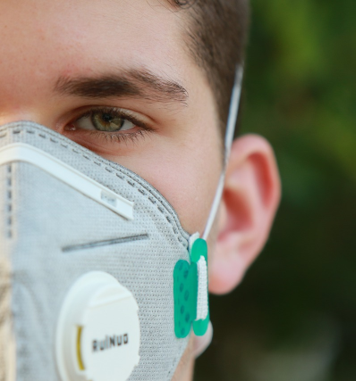
Psychology, Stress, and Uncertain Futures: Confronting the Coronavirus Pandemic

By: Gracie B.

Pixabay license
No attribution required
With all of the uncertainty surrounding the COVID-19 pandemic, we are living in an extraordinarily stressful time. Social distancing to prevent the spread of the virus presents many challenges to students and families across the world. The CDC cites that teens are especially vulnerable to crisis-related anxiety. After spending our entire school careers preparing for life after graduation, it is undoubtedly frightening to have our futures suddenly shrouded in ambiguity. Now, perhaps more than ever, it is important to take care of both our physical and mental health. Maintaining positivity and stability is crucial to fostering the courage and resilience that will carry us through this difficult season. 

The internet is full of endless ideas on how to relieve stress, but the reality is that there is no one-size-fits-all approach to wellbeing. While many people use deep breathing or meditation to destress, there are countless other, less conventional ways to blow off steam. CDC experts assert that simply partaking in enjoyable activities fosters positive mental health. Whether you enjoy jamming out on your guitar or snuggling up with a good book, find fun and engaging ways to fill your spare time. 

In the hustle and bustle of everyday life, it can be surprisingly difficult to make time for hobbies we enjoy. High schoolers tend to be consumed by extrinsic motivations, meaning that we participate in activities primarily to win awards and to bolster our college applications. The coronavirus has removed many of the extrinsic motivators in our lives. We no longer receive any outward gratification for outsourcing our classmates on a calculus test or crushing the opposing team in a soccer game. Seniors are facing the possibility that no one will deliver the coveted valedictory speech or flaunt a scholar’s medal at graduation. Self-isolation has forced us to rely on intrinsic motivation: we must prioritize goals that are truly important to us as individuals rather than focusing on what society deems valuable.

As the world around us changes rapidly, we are flooded with reminders to remain positive. Time and time again, research has shown that optimism has a wide range of health benefits. However, many teenagers gravitate towards pessimism, and disappointment can exacerbate a vicious cycle of negativity. If you have a penchant towards negativity, consider finding productive ways to tap into your own cynicism. Questioning is a key component of critical thinking, especially in an age of rampant misinformation. Doubt reminds us that we shouldn’t believe everything we hear and encourages us to exercise caution to protect ourselves and others.

However, a healthy dose of realism also illustrates that our lives are not over and that there is hope for a much brighter future. Hope may be the most important building block of resilience. Psychologists associate the loss of hope with a phenomenon known as learned helplessness, which describes the tendency to give up when one feels powerless. The development of a sense of control is the key to breaking the cycle of learned helplessness and fueling a more positive outlook. Methods of establishing a sense of control include taking small steps towards overarching goals and practicing self-acceptance. NFL star Tony Dungy once said, “You can’t always control circumstances. However, you can always control your attitude, approach, and response.” We are not in control of the pandemic, but we have the power to shape our reactions. We have a unique opportunity to decide how our generation will resurge from the coronavirus pandemic. By striding forward with strength, tenacity, and compassion, we will emerge from this crisis with our heads held high.


Works Cited

“Learned Helplessness.” Psychology Today, Sussex Publishers, www.psychologytoday.com/us/basics/learned-helplessness.

“Mental Health and Coping During COVID-19.” Centers for Disease Control and Prevention, www.cdc.gov/coronavirus/2019-ncov/daily-life-coping/managing-stress-anxiety.html.

Myers, David G. Psychology (High School Printing). 9th ed., Freeman/Worth, 2011.

“Tony Dungy.” Biography.com, A&E Networks Television, 28 Aug. 2019, www.biography.com/athlete/tony-dungy.

“Tony Dungy Quote: ‘You Can't Always Control Circumstances. However, You Can Always Control Your Attitude, Approach, and Response.".” Quotefancy, quotefancy.com/quote/1169140/Tony-Dungy-You-can-t-always-control-circumstances-However-you-can-always-control-your.

“You've Got This: Mental Tricks to Feel in Control When Everything Is Going Wrong.” Reader's Digest, www.rd.com/advice/work-career/feel-in-control/.

Thursday, February 20, 2020

What to Do When You Feel like School is Taking Over Your Life

By: Sonia G.


Copyright free
Does the school week ever seem like a boring routine to you? Do your days look the same? Do you have time for family and friends, or do you feel like school is taking over every aspect of your life? School should be a priority, but it should not be the only one. Your family, friends, and possibly religion are also a priority, and if you play a sport or do activities outside of school, you have even more priorities to balance. But sometimes, school and all the stress that comes along with it can feel like it’s taking over everything. 

You might feel like your projects and studying barely leave you with time to interact with family and friends. Or that all of the cumulative stress leaves you unable to function. Either way, I have developed a plan that can help you whenever you begin to feel like school is becoming your life. 

First, I would recommend that you take breaks. If you can find a way to work and then take a break, you can give yourself a boost of energy. Your break can be as quick as checking your email or as lengthy as watching a movie. Just make sure that whatever you choose, your break is not longer than your work time and still allows time for you to finish the rest of your work. 

Another idea is for you to work during times that you do not typically think of as being opportunities to do schoolwork. Depending on your school, you may have a study hall or designated time when you can work. If you’re not as lucky, I would like to point out times that you may have overlooked. For example, on the ride to and from school, you have time to read and study. At lunch, you can create a study group with other friends and study, do worksheets, or work on projects. By applying this principle to your own life, you may also find other “free periods” that you can take advantage of. This will help you free up space so that you don’t have as much to do. 

Finally, I would like to suggest that you allow yourself to relax. Take time to do things that you enjoy so that you can approach your schoolwork with a clear mind. When you are able to focus on your assignments, you are much more likely to put forth the best effort possible and do much better than you could have done when distracted. 


Thursday, December 6, 2018

In Over Your Head

By: Isabella S. 

Did you know that the way a diver makes known that they need to ascend is a thumbs up? It may be used if something is wrong with breathing equipment or there is some other emergency. However, if you or I saw this gesture we would likely believe it to a be a positive symbol. Sometimes, one can appear to be doing just fine, when they are really signalling for help.


Picture by Isabella S.

You may be turning in all of your homework on time, only to go to class and struggle with the next test. You may have many friends, but replace your own needs with theirs. Maybe you are the star of a sports team, but you no longer find joy in playing. You may be the leader of a school club, but have trouble seeing progress. Maybe you are the paradigm of a good student, but don’t take time to build friendships. You may be involved in every community organization and every club that comes your way, but you can’t give your full effort to any cause.

In high school, there are many responsibilities one may assume and you are most likely surrounded by people giving you advice on how best to succeed (that is what this blog is for). As you swim through these various waters be careful of your own limits. It is okay to abandon surging tides, even if you have been swimming in them for a long time. It is okay to ask for help and it is okay to fail.

At the beginning of your high school career it is important to experiment with different dives. It is necessary for you to explore your interests or potential interests. You may jump in to various groups and realize that this pool is not for you. If you are no longer interested in playing basketball, or the debate club is no longer acting as a vehicle for your own personal progress, or maybe you are not sleeping for more than a couple hours each night, it may be time to ascend.

As you read through this blog and garner advice on how to be successful, remember that your definition of success is most important. Do not jeopardize your own mental and emotional health in order to fit society’s notion of success. You may be successful in becoming a positive role model for your younger siblings. Success may look like being the friend that everyone can lean on for support and good advice. Success may be exploring a nagging question through research and discussion. It may include becoming more independent or learning to depend on others. If you are looking back at 2018 and feel like you’re sinking, use the new year to make changes. Ask your friends and family to help you re-evaluate your life and see where you are in over your head. Reflect on your situation by making a list of what you are involved in and what you want to be involved in. Do not forget to give yourself credit for all of your success this past year.

An Important Note: Your struggle may be more serious than simply reducing your load or joining a new group. If you are sinking and cannot find a way up, it is important that you ask for help. No diver jumps in without someone on shore to help pull them out. Seek the help of your parents, a guidance counselor, a mentor, or another trusted adult. If you are experiencing more difficulty than you feel comfortable sharing or believe you need help from someone more qualified, there are resources available. You will find some of them at this link: https://giveusthefloor.org/resources/#hotlines. It is also important that you understand that you are not alone. Many students experience distress, but we misread their gesture as a thumbs up.