Showing posts with label inspiration. Show all posts

Sunday, March 20, 2022

Starting Your Own Initiative as a High School Student

Loading...

Loading...

Thursday, March 25, 2021

Why We Need Youth Social Entrepreneurship

Loading...

Loading...

Monday, August 31, 2020

Why Take a Gap Year?

By: Jasmin S. 

Although gap years between high school and college are not as common in the U.S., they are very popular among students in places like Europe. This may seem surprising to us, but it makes perfect sense why one would choose to take a year off between 12th grade and freshman year of college. After spending four years balancing various extracurriculars, classes, studying, family, part-time jobs, and more, you might feel like jumping right into college is a bit overwhelming. Maybe you need a break from the constant pressure of your classes and tests, or you’re still not sure which major to choose. If this is the case, a gap year might be the perfect solution for you! 


Better Performance in College 

"Gap Year: preparati a viviere l'anno piú bello
della tua vita!"
by Viaggio Routard is licensed
under CC BY 2.0

Many parents fear that if their child stops taking classes and going to school, they will become lazy. This is not the case at all. In fact, students who take gap years tend to be more mature than their peers by the time they enter college. According to 2015 research conducted by Temple University in conjunction with Gap Year Association, the six top reported outcomes of a gap year were personal, rather than career or academic-oriented. Ninety-seven percent of alumni who responded indicated that their gap year experience increased their maturity, while 96 percent said it increased their self-confidence (Writers). 


First-year classes in college can actually be easier thanks to your gap year, especially if you take that time to personally acquaint yourself with the courses you plan on taking. You’ll be able to pick up new languages much quicker if you've already spoken with native speakers. Humanities and other courses can also be easier after all those museum and historical landmark visits! 


Living Independently 

Image by Steve Buissinne from Pixabay
Whether you choose to travel on your own or with a program, you will learn essential skills like grocery shopping for yourself, budgeting, healthy eating, navigating public transit, etc. All of these skills are crucial for college and adult life in general! If you choose not to work with a program, you can always do a work holiday option. Thereby having the opportunity to not only make money but immerse yourself deeply into another culture for a longer period of time than would be possible if you were merely backpacking. 


Establishing Worldwide Connections 

Image by Voy Zan from Pixabay

One of the best things about taking a gap year is the opportunity to meet new people. Building lifelong friendships with people from various countries can help you navigate unknown places and refine your language-speaking skills, and those friends will likely welcome you with open arms if you return! Learning how to make friends in an unfamiliar place with unfamiliar people is a skill that will come in handy in college as well. 


Endless Possibilities 

There are a plethora of activities to choose from when it comes to structuring your gap year. There are many ways to stay productive and busy, so there is no need to worry about doing nothing or playing video games in your mom’s basement all day. There is a wide range of possibilities (even on a budget) from backpacking in Asia to landing an internship in a different state. 


No Money, No Problem 

Image by Alex Strachan from Pixabay

A common myth surrounding gap years is that you have to have a lot of money to be able to take a whole year off from school. However, this is not necessarily the case. Some students use gap years as an opportunity to save up money for college and future living expenses. Others may choose to spend their time volunteering abroad with a program that helps cover living costs. That’s right, some programs pay you to take a gap year! Volunteering can help you gain a new perspective on the world. In fact, they can help students give back to their communities throughout their lives. Many gap year students become philanthropists when they are older due to their global perspective. 


Countless Traveling Options 

Image by skeeze from Pixabay
International travel might be your dream, but there are also many exciting places in the Americas you can visit! You could go to Canada and practice your French, an American national park to enjoy nature, Brazil to learn Portuguese, Mexico to eat delicious food, and so much more! Traveling to any new place is an enriching experience that will teach you new things. 


As long as you get out of your comfort zone, try new things, make new friends, and live independently for what’s likely the first time, a gap year will be well worth your time! According to GoOverseas.com, more than 90% of gap year alumni say that their gap year experiences helped them gain respect for other customs and cultures (Perez). 


Keeping It Local 

Image by Bella H. from Pixabay

If you choose to stay at home during your gap year, there are still plenty of options for you! After all, travel can be daunting and not everyone wants to do it. With more and more programs appearing online, you can do all types of jobs remotely! From teaching music to marketing on social media, you will likely be able to find a job that you enjoy, can do online, and can help you save money for college! You can also get involved in your community by volunteering for local organizations. Furthermore, you will have the opportunity to learn new skills. Have you been wanting to learn how to play an instrument? How to code? Now is your chance! 


Conclusion 

Overall, taking a gap year, though not common, has numerous benefits. It can help you grow a new set of skills you didn’t know you needed for college, help build a global network of new friends, assist you in choosing the right career, and provide you with experiences that will last a lifetime. If you would like to further research gap years, there are links and resources below to aid you in your search for ideas below. 


Resources for Gap Year Programs 


Works Cited 

“Does Taking a Gap Year Increase the Ceiling for Students?” NYU Steinhardt, 23 June 

2017, counseling.steinhardt.nyu.edu/blog/gap-year-after-high-school/.

Perez, Olivia Christine. “Why You Should Take a Gap Year After High School.” Go 

Overseas, 04 June 2020, 

www.gooverseas.com/blog/why-should-take-gap-year-after-high-school.

Writers, Staff. “Taking a Gap Year: Pros & Cons and How to Apply to College.” 

AccreditedSchoolsOnline.org, AccreditedSchoolsOnline.org, 17 July 2020, 

www.accreditedschoolsonline.org/resources/taking-a-gap-year-before-college/.

Thursday, March 26, 2020

What to Do During Social Distancing

By: Angelina N.

What is social distancing, and why is it important right now? 
Social distancing refers to going out minimally, avoiding physical contact with others, and refraining from large gatherings of people. It is used to prevent the spread of infectious diseases, such as the ongoing COVID-19 pandemic. The contagiousness of a disease is measured based on the R0
"R Naught Ebola and Flu Diagram" by Kiera Campbell is licensed
under CC BY-SA 4.0
(pronounced “R naught”) value, or the average number of individuals that an infected person transmits the disease to. For diseases exceeding an R0 value of 1, such as COVID-19 (which has an R0 value of about 2.2), the number of infections can multiply rapidly because each infected person will infect more than one other person. In addition, COVID-19 has an incubation period of between two and 14 days, with the average being five days. This means that after contracting the disease, an individual will not exhibit symptoms for an average of five days but will still be contagious during this time frame. Since many infected people do not realize they are infected, they can unintentionally transmit the disease to people that they come into contact with. Actively social distancing is therefore necessary to prevent people from unknowingly infecting those with compromised immune systems or older individuals, who are much more likely to experience severe and possibly fatal symptoms. By taking precautionary measures, the number of infections can be reduced significantly. This also alleviates the burden on hospitals, which may experience a shortage of supplies, equipment, or staff otherwise. 

Although practicing social distancing is beneficial to the community at large, spending most of your time at home may seem like an incredibly difficult and dull adjustment. However, instead of viewing it as a major impediment to social contact and various forms of entertainment, you should view it as an opportunity to accomplish tasks you normally wouldn’t have the time for. Below is a list of ideas of how to spend your period of social distancing in both fun and/or productive ways. 


Find a fun mental stimulus 
Doing a mentally stimulating activity is a great way to combat boredom. 
  • Play a board game: Options include Monopoly, chess, Scrabble, etc. — the choices are endless! 
  • Go old-fashioned: Try your hand at Sudoku, crossword puzzles, jigsaw puzzles, brainteasers, or crafts (online DIY videos are a great source of inspiration). 
  • Write a short story or poem: Brainstorm ideas that you could turn into a piece of writing. 

Take time for self-care 
Since most events have been cancelled, your schedule is most likely cleared right now. Instead of sinking into boredom, you should see it as a calm refuge from the chaos and incessant hassle of normal life. Now is a great time for you to reflect on your mental and physical health. 
  • Practice meditation: Meditation is focusing on being more present and aware in all aspects of daily life through techniques such as mindfulness. It has been scientifically proven to be conducive to both mental and physical health, with some of its benefits being lower blood pressure and stress levels, improved sleep and memory, and a stronger immune system. There are numerous meditation apps that can be downloaded with the press of a button (Waking Up, Headspace, Calm, and many more), so meditation is a practice that can be conveniently incorporated into your daily routine. 
  • Self-reflect: Oftentimes, we get so caught up in seemingly endless tasks, whether that be
    Pixabay license- no attribution required
    schoolwork deadlines or upcoming exams, that life seems like a ceaseless “this, that, this, that” and so on so forth. During social distancing, it may seem like everything has suddenly come to a standstill, which is a chance for you to look back on the past few months and plan for the future. Take some time to reflect on your personal growth and accomplishments, as well as what you are still working towards. Set goals for yourself and determine how you will reach them. Jot these ideas down in a notebook, or type them on your computer for future reference. 
  • Do what you enjoy: This last one is simple — spend time doing activities that you love! This may be different for every person; it could be spending more time with family, having a movie night with popcorn, or reading a book that’s been on your to-read list for some time. 

Start good habits 
It can be hard to incorporate new habits during most of the year because we are often too occupied to feel motivated to do so. Now is the time to pick up good habits that can have a positive impact throughout the rest of your life. 
  • Stay active: Staying at home all day makes it easy to fall into a sedentary routine. However,
    Pixabay license- no attribution required
    social distancing does not necessarily mean refraining from leaving the house entirely; in fact, it’s a great idea to go outside for a walk or a run in a park or other uncrowded areas during the day. There are also many great at-home workout videos online that provide fun and engaging ways to be active. Learning creative ways to exercise and experiencing the rewards of being physically active may motivate you to include it as a regular part of your routine in the future. 
  • Eat healthy: A great way to use your spare time is to learn about nutrition and creative healthy recipes. Experiment with various dishes, and determine what works best for you. This may help elevate your consciousness about healthy eating habits in the long-term, which will beneficially impact your life in countless ways. 

Do some extra studying 
Since after-school events, most extracurriculars, and transportation time have probably been taken out of your schedule, there is now plenty of extra time to study, even if your face-to-face school is requiring you to attend virtual sessions. 
  • Study for AP classes: AP exam season is coming up, which means that it’s a good time to start
    Pixabay license- no attribution required
    reviewing information from last semester. It is also a good idea to keep up with College Board’s updates on modifications to the AP exams this year. College Board has already posted the changes to every AP course curriculum, along with the general structure of the altered exams. Make sure to check their website to avoid studying material you are no longer responsible for and to be prepared for this year’s test format. 
  • Do some SAT and/or ACT practice: Use this time to read some SAT/ACT prep books, as they contain helpful techniques for succeeding on these standardized tests. Once you’ve reviewed these techniques, take a few practice exams; these are lengthy and typically difficult to fit in with other obligations, so now is the perfect time to try them. 

Learn something new 
If you’re still having a hard time deciding what to do, it may be a good idea to try something completely new and possibly discover new interests in the process. Ideas include learning some magic tricks, trying out calligraphy, or learning a new language through Duolingo. If you’re still having a hard time choosing, there are great sources of inspiration all over the Internet. 


Donate for a good cause 
Taking social distancing seriously is already a great way to protect the well-being of those around you, but you can take it a step further by donating during this time of need. 
Pixabay license- no
attribution required
  • Donate blood: Due to the ongoing pandemic, blood drives have been cancelled, meaning that there is currently a severe blood shortage. If you are interested in donating blood, check out the requirements for a student blood donor using this link: https://www.redcrossblood.org/donate-blood/how-to-donate/info-for-student-donors.html 
  • Donate to a food bank: Families who face food insecurity are especially vulnerable during this time, with grocery store supplies being depleted rapidly. If possible, consider donating even small instant food packages, candy bars, or personal hygiene products; although it may be difficult to donate in bulk quantity right now, even the smallest contributions can make a difference. 

Social distancing may seem extremely monotonous, but it is actually a great chance to try fun at-home activities, take time for self-reflection, and get ahead in schoolwork and studying. So take advantage of this time to plan out a list of to-dos and start checking it off! 


Works Cited 
Caddy, Becca. “Best Meditation Apps: Practice Mindfulness with Headspace, Calm and More.” 
TechRadar, TechRadar, 21 Mar. 2020, www.techradar.com/news/best-meditation-apps.
Cascella M, Rajnik M, Cuomo A, et al. Features, Evaluation and Treatment Coronavirus 
(COVID-19) [Updated 2020 Mar 8]. In: StatPearls [Internet]. Treasure Island (FL): 
StatPearls Publishing; 2020 Jan-. Available from: 
https://www.ncbi.nlm.nih.gov/books/NBK554776/ 
Hersh, Erica. “Coronavirus Incubation Period: How Long Before Symptoms Appear?” Healthline, 
Healthline Media, 19 Mar. 2020, 
www.healthline.com/health/coronavirus-incubation-period. 
“185_factsheet_social_distancing.Pdf.” Santa Clara County Public Health Department. 
“What Is R0?: Gauging Contagious Infections.” Healthline, 
www.healthline.com/health/r-nought-reproduction-number.
Vongkiatkajorn, Kanyakrit, and Laura Daily. “How You Can Help during the Coronavirus 
Outbreak.” The Washington Post, WP Company, 21 Mar. 2020, www.washingtonpost.com/nation/2020/03/21/how-you-can-help-during-coronavirus/?arc404=true.  

Thursday, January 23, 2020

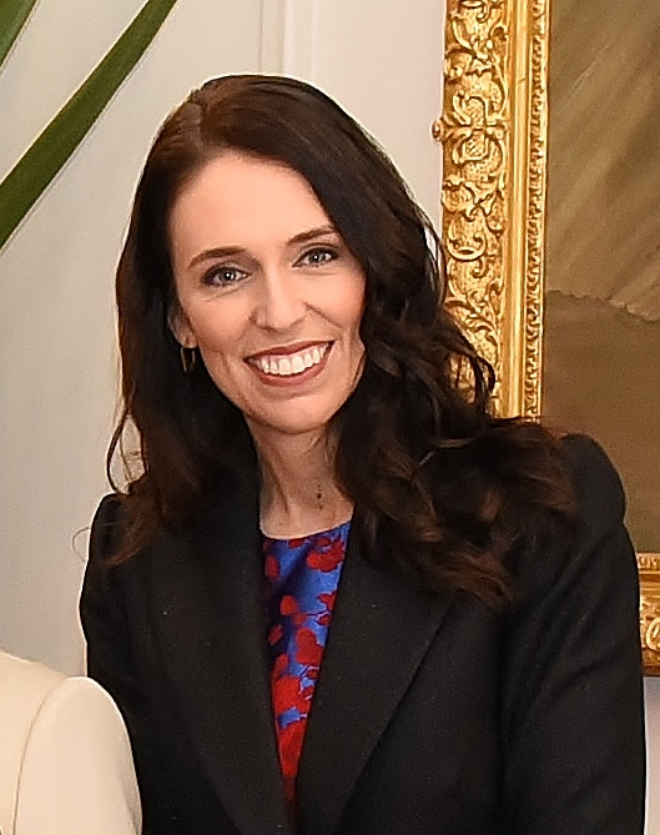
Jacinda Ardern: Prime Minister of New Zealand (2017 - Present)

By: Gracie B.

This post is the first in a series of four articles highlighting the unique contributions of influential female world leaders. This month's article features Jacinda Arden, the current Prime Minister of New Zealand.


“Jacinda Ardern” Wikimedia Commons, Wikipedia,


"You can be strong, and you can be kind.”  – Jacinda Ardern

It was September of 2018, and the Prime Minister of New Zealand boarded a plane to New York for a United Nations General Assembly. While other politicians invited translators and advisors to the summit, Ardern brought an unexpected guest: her infant daughter, Neve.1 After becoming the second woman in modern history to give birth while leading a nation, Ardern sought to express her support for working mothers.2, 3 In this bold show of solidarity, she demonstrated the progressive, empathetic nature of her prime ministership. “You can be strong, and you can be kind,” she said when asked to explain her ideal of compassionate government. In an interview on The Today Show, the Prime Minister outlined her goal of promoting the overall wellbeing of New Zealanders.4 Although accomplishing this agenda is no easy task, Ardern has refused to shy away from the complex challenges facing New Zealand. Her willingness to tackle contentious issues head-on has garnered global interest in her innovative leadership style.

Jacinda Ardern was born in Murupara, a part of New Zealand riddled with poverty and Maori gang violence. She witnessed destitution first-hand, and her early experiences sparked her passion for inciting political change.5 After relocating to Auckland, Ardern joined the Labour Party at just seventeen years old.6 The Labour Party shapes New Zealand politics through a tripartisan coalition government, which brings together a multitude of different perspectives to create policy.7 Although the Labour Party is often described as center-left, Ardern has skirted its most liberal fringes. For instance, her service as president of the International Union of Socialist Youth earned her the nickname “Socialist Cindy.”8, 9 Yet, despite conservatives’ concerns over her overt leftism, Ardern gained a wide following after becoming leader of the Labour Party in 2017.10 The country was soon caught up in a craze known as Jacindamania, which fueled her campaign for the prime ministership in the same year. Thirty-seven-year-old Ardern was appointed to the position by the Governor-General, becoming the youngest Prime Minister in New Zealand’s history.11, 12

As the newly appointed head-of-state, Ardern proposed a sweeping policy agenda. She marketed a ‘fairer deal’ for New Zealand citizens, which included free college, decriminalization of abortion, and initiatives to mitigate childhood poverty. In contrast to pro-immigrant American liberals, she has pushed to reduce the number of migrants entering New Zealand.13 Although Ardern is a self-described champion of humanitarianism, she posits that curbing immigration would mitigate the country's housing shortage.14 Additionally, Ardern has been hailed for her contributions to the feminist movement. She was a proud participant in the 2016 Women’s March and argued against the expectation that women reveal family plans to potential employers in a fiery interview exchange.15, 16 Many analysts have been charmed by her unconventional conduct, which is summarized by journalist Maureen Dowd in her New York Times’ Op-Ed entitled “Lady of the Rings: Jacinda Rules.” Dowd, who sat down for an interview with Ardern, was immediately stricken by the Prime Minister’s casual demeanor. From preventing a proposed raise to her own salary to shopping at K-Mart, Ardern’s frugal sensibility has allowed her to prioritize the interests of ordinary citizens.17 Yet, her “relentless positivity” was threatened by the 2018 Christchurch mosque shooting, in which an Islamophobic gunman killed dozens of worshippers. Jacinda Ardern was quick to comfort the families of victims, condemn bigotry, and push for gun control. Ardern’s clarion call for tolerance received worldwide praise, demonstrating her ability to lead in both triumph and tragedy.18

Although not without controversy, Jacinda Ardern’s prime ministership is transforming New Zealand. Ardern champions an approach to policy that is designed to be both practical and compassionate. In prioritizing education, healthcare, and housing, Ardern hopes to create a more equitable society in which all people can share in the country’s prosperity. As she continues to challenge conventions and push for change, Jacinda Ardern’s progressive policies will undoubtedly continue to play an influential role in global politics. 


1 France-Presse, Agence. “New Zealand's Jacinda Ardern Says Baby Neve Will Attend United Nations with Her, as She Returns to Work.” The Telegraph, Telegraph Media Group, 2 Aug. 2018, www.telegraph.co.uk/news/2018/08/02/new-zealands-jacinda-ardern-says-baby-neve-will-attend-united/.
2 Dowd, Maureen. “Lady of the Rings: Jacinda Rules.” The New York Times, 8 Sept. 2018, https://www.nytimes.com/2018/09/08/opinion/sunday/jacinda-ardern-new-zealand-prime-minister.html.
3 McLaughlin, Kelly. “New Zealand Prime Minister Jacinda Ardern Has Been Applauded for Her Actions Following the Christchurch Mosque Shootings. Here's Everything You Need to Know about Her.” Business Insider, 20 Mar. 2019, https://www.businessinsider.com/new-zealand-prime-minister-jacinda-ardern-biography-2019-3#ardern-joined-new-zealand-parliament-in-2008-2.
4 “New Zealand’s Prime Minister Talks About Being a New Mom and a World Leader.” Today, NBC Universal, New York, New York, 24 Sept. 2018.
5 Wallenfeldt, Jeff. “Jacinda Ardern.” Encyclopædia Britannica, https://www.britannica.com/biography/Jacinda-Ardern.
6 Wallenfeldt, “Jacinda Ardern.”
7 “New Zealand : Constitution and Politics.” The Commonwealth, Commonwealth Secretariat , https://thecommonwealth.org/our-member-countries/new-zealand/constitution-politics.
8 Wallenfeldt, “Jacinda Ardern.”
9 Dowd, “Lady of the Rings: Jacinda Rules.”
10 Wallenfeldt, “Jacinda Ardern.”
11 “New Zealand : Constitution and Politics.” The Commonwealth.
12 Dowd, “Lady of the Rings: Jacinda Rules.”
13 Wallenfeldt, “Jacinda Ardern.”
14 da Costa, Ana Nicolaci. “New Zealand PM Says No Immediate Cut to Immigration.” Reuters, 6 Nov. 2017, www.reuters.com/article/uk-newzealand-politics-ardern/new-zealand-pm-says-no-immediate-cut-to-immigration-idUKKBN1D708L.
15 Dowd, “Lady of the Rings: Jacinda Rules.”
16 Wallenfeldt, “Jacinda Ardern.”
17 Dowd, “Lady of the Rings: Jacinda Rules.”
18 McLaughlin, Kelly. “New Zealand Prime Minister Jacinda Ardern Has Been Applauded for Her Actions Following the Christchurch Mosque Shootings. Here's Everything You Need to Know about Her.”

Friday, September 20, 2019

A Letter to My Peers


By: Sonia G. 

To all my fellow high schoolers,
Picture by Angelina N.

As we find ourselves preparing for a new school year filled with new adventures, I would like to encourage you to continue to strive for excellence. Continue to push yourself to try new things. Join a new club at your school or better yet, start something that you’ve always wanted to participate in. As a rising junior, I find myself with only a short time left in high school. I have realized that you have to take advantage of every opportunity available. High school is the time to make connections, so take this school year as the time to put yourself out there and meet new people. You should also take this year to experiment in all aspects of your life. Figure out what works for you because the habits that you develop now will influence your physical and mental health in the future. 

While there will be a lot of exciting things to work on this year, I also have some advice for you all. Whatever isn’t working for you, whatever is keeping you from being who you want to be and whatever is holding you back from moving on, push it away. Find what works for you, and eliminate everything else. I always like to refer people to the 90 percent rule, which states that if an item or activity’s rating is less than 90 out of 100, your response should be “no”. I believe that this rule should be used to allow you to purge the negativity from your life. Use this rule to help yourself quit harmful habits and to replace those habits with practices that will help you improve your life. 

When the first day of school arrives, if it hasn’t already, remember to make the most of this year. If you are a rising freshman, know that high school and middle school are vastly different. If you did not enjoy middle school, that does not mean that you won’t enjoy high school. If you didn’t enjoy high school, then try looking at it through a different lens. I believe that with the support from your friends and family, you will be able to make your high school years unforgettable. This school year, eliminate the things that are holding you back, and take advantage of every opportunity that you can to find what gives YOU purpose, a purpose that may be your driving force for long past your high school years. 


Wednesday, March 27, 2019

Brain on Paint

By: Pauline A.


It’s Friday afternoon. You hop off your bus and make your merry way home. As you enter the halls of your house, you make it straight to the TV room, drop your backpack onto the floor, and plop on the couch. You tilt your head back, fatigued from the long day of 7 hours in school, and your thoughts meander to what you’re going to do for the weekend. You take out your phone and scroll through YouTube. As you wander through the plethora of video thumbnails, you spot an old low-fidelity 1980’s looking video cover of a man in a cool pale blue sleeved shirt, with a nice soft brown afro, smiling at the camera; before him stands his easel, with a mountain before it on a backdrop of a canvas. Your brows furrow, as your finger instinctively clicks upon it with the questions: “Why’s this in my video feed?”, but more importantly, “Is that Bob Ross?”. Which now leads to the final question: “How’d he do that?!”. What Bob Ross was doing back in the 80s was painting landscapes all by himself, with no guidance whatsoever, in front of a recording camera. The soothing sounds of paint scraping upon the canvas in the low-quality video have invoked the response of “I wish I could do that!” from many people. As it turns out, you can! When your brain is on paint, a plethora of glorious emotions and thoughts can render you speechless!

It may not be obvious at first, but there are many health benefits to painting. Some health benefits include the improvement of dexterity, memory, and encouragement of concentration. When one holds a paintbrush and strokes onto the canvas, the flexibility of their wrist, fingers, and their hands is heightened. Long periods of this repetitive movement can gradually steady your hand, and thus prevent it from shaking often. However, many overlook that painting or performing any other artistic craft is often done for a long period sitting down, so stretching your hands and resting your body is essential for pleasant painting experience! 

The improvement of memory and concentration go hand in hand. A person who is painting must focus on the meticulous details of what they’re painting and think on their subject matter, whether it’s from their own imagination or if they are using real-life references. Studies have shown that this repetition of focus can help lower the risk of memory loss illnesses at an older age. 


Photo by geralt on Pixabay is licensed under Pixabay License

From an artist’s perspective, I encourage anyone of any age to start painting (though this can be applicable to any hobby)! One of the main reasons why is because it encourages perseverance.  Making paintings enforces trial and error (believe it or not) and researching techniques. Additionally, being surrounded by those who are better than you is a beneficial experience. While many people are intimidated by this, it is ultimately one of the key points that lead to improvement. An essential point to learn is that failure isn’t such a terrible thing to experience. In fact, it can often help pivot an artist in the most successful path towards growth. 

Second, painting allows the expression of emotion. You have free will of what you can paint. From landscapes, to people, to characters, or just splashing stuff that’s on your mind at the moment onto the canvas is a safe outlet for expressing your ideas and pushing your imagination!


Photo by Ryan Hickox on Flickr is licensed under CC BY-SA 2.0

Third, your perception of reality will evolve gradually over time. Studying and painting/drawing (whatever craft in the fine arts you choose), allows a person to see the world in different perspectives. If an artist has studied and built upon their craft, they are more likely to be able to deconstruct basic visual appeals in our daily life: from how the sunlight casts over trees/organisms, how everything one can see can be deconstructed into shapes, and how one can understand the textures of mundane objects. It’s details like these that build up from crafting pictures on the canvas. 

However, many choose not to start painting because it can be too overwhelming at once. Painting has a plethora of approaches and may not seem too linear for a beginner to understand or start on at first. Second, it doesn’t seem “technical” or applicable in many jobs. Paintings are often seen as just pictures on the wall, but they help branch out in different types of artistic careers, from an illustrator at a comic book company to a graphic designer for a marketing firm. Or, they can be used as simple decorations for houses. Last, painting supplies range in price. Like anything else, the better quality products are more expensive than the low-quality ones. A lot of beginners are overwhelmed on deciding which paint brands to choose, paint brushes to buy, and which canvases should be used. 

Photo on Pxhere is licensed under CC0

Although painting can seem overwhelming at first, you should try it out! It can help alleviate boredom, and it allows you to step out of your comfort zone! From personal experience, I got into drawing and painting by looking up “how to draw” and “how to paint” videos on YouTube. This helped a lot by showing me the different ways painting and drawing can be approached; plus, it offered a good introduction into the hobby. These videos are mostly aimed at people who’ve not drawn for long  or picked up a paintbrush, so there’s no need to worry about making something good right away. With materials, it’s a good idea to just buy cheaper materials (like in Walmart or your local dollar store), or “student-quality” materials (products aimed at the most affordable price), to explore your options and to get a feel of what you would like to paint. However, this doesn’t mean you should stick with cheaper qualities forever. Lastly, this is a controversial but common phenomenon, but believe it or not, many artists start out copying their favorite artist(s).  There’s no shame in copying or redrawing/repainting a piece so long as the artist is credited/recognized AND it is not being made for profit! 

Overall, whether or not you want to try out painting or a new hobby is all up to you! But just remember, with the vast Internet, many resources are at your fingertips. It’s up to you whether you use them to your advantage to develop your artistry. 


Art by zatsukii (Pauline A.) on Instagram. You can find her here: https://www.instagram.com/zatsukii/?hl=en

Thursday, December 6, 2018

In Over Your Head

By: Isabella S. 

Did you know that the way a diver makes known that they need to ascend is a thumbs up? It may be used if something is wrong with breathing equipment or there is some other emergency. However, if you or I saw this gesture we would likely believe it to a be a positive symbol. Sometimes, one can appear to be doing just fine, when they are really signalling for help.


Picture by Isabella S.

You may be turning in all of your homework on time, only to go to class and struggle with the next test. You may have many friends, but replace your own needs with theirs. Maybe you are the star of a sports team, but you no longer find joy in playing. You may be the leader of a school club, but have trouble seeing progress. Maybe you are the paradigm of a good student, but don’t take time to build friendships. You may be involved in every community organization and every club that comes your way, but you can’t give your full effort to any cause.

In high school, there are many responsibilities one may assume and you are most likely surrounded by people giving you advice on how best to succeed (that is what this blog is for). As you swim through these various waters be careful of your own limits. It is okay to abandon surging tides, even if you have been swimming in them for a long time. It is okay to ask for help and it is okay to fail.

At the beginning of your high school career it is important to experiment with different dives. It is necessary for you to explore your interests or potential interests. You may jump in to various groups and realize that this pool is not for you. If you are no longer interested in playing basketball, or the debate club is no longer acting as a vehicle for your own personal progress, or maybe you are not sleeping for more than a couple hours each night, it may be time to ascend.

As you read through this blog and garner advice on how to be successful, remember that your definition of success is most important. Do not jeopardize your own mental and emotional health in order to fit society’s notion of success. You may be successful in becoming a positive role model for your younger siblings. Success may look like being the friend that everyone can lean on for support and good advice. Success may be exploring a nagging question through research and discussion. It may include becoming more independent or learning to depend on others. If you are looking back at 2018 and feel like you’re sinking, use the new year to make changes. Ask your friends and family to help you re-evaluate your life and see where you are in over your head. Reflect on your situation by making a list of what you are involved in and what you want to be involved in. Do not forget to give yourself credit for all of your success this past year.

An Important Note: Your struggle may be more serious than simply reducing your load or joining a new group. If you are sinking and cannot find a way up, it is important that you ask for help. No diver jumps in without someone on shore to help pull them out. Seek the help of your parents, a guidance counselor, a mentor, or another trusted adult. If you are experiencing more difficulty than you feel comfortable sharing or believe you need help from someone more qualified, there are resources available. You will find some of them at this link: https://giveusthefloor.org/resources/#hotlines. It is also important that you understand that you are not alone. Many students experience distress, but we misread their gesture as a thumbs up.